

Image: AI-generated illustration (Indonesia–Oman collaboration concept)
Malang — International academic collaboration is most impactful when it extends beyond research and creates opportunities for broader knowledge exchange. This spirit was reflected in the partnership between Universitas Negeri Malang (UM) and Dr. Mohammed Mubarak Salim Al Ajmi, Director of Professional Guidance and Counseling at the Ministry of Education of the Sultanate of Oman, under the Universitas Negeri Malang International Postdoctoral Fellowship (UM IPF).
Supported by the EQUITY scheme—an initiative of the Indonesian government through the Ministry of Higher Education, Science, and Technology in collaboration with LPDP—the UM IPF programme is designed to strengthen the global competitiveness of Indonesian universities by fostering international research collaboration and academic engagement.
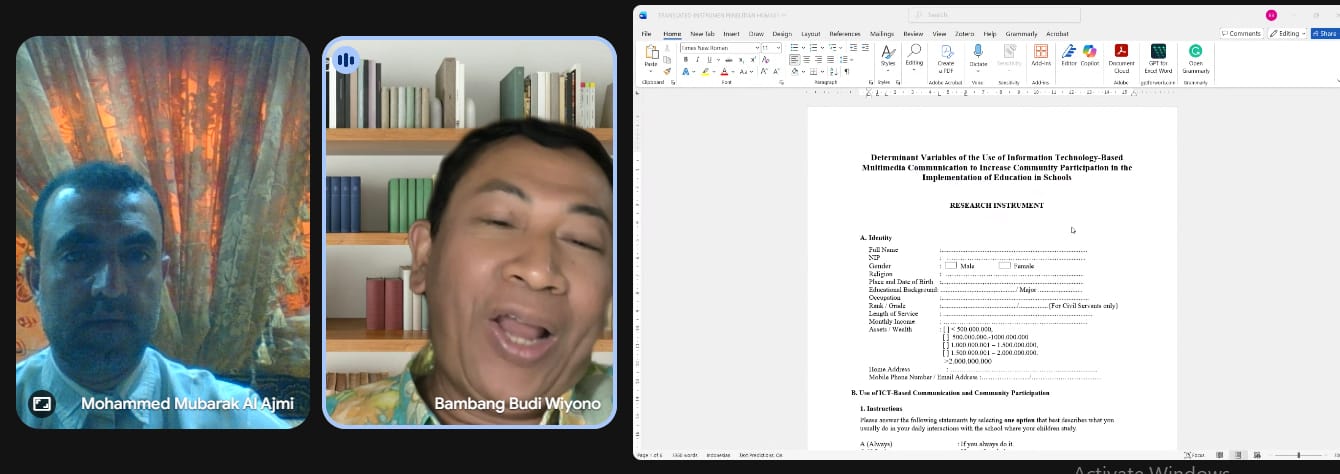
As part of the programme, Dr. Al Ajmi collaborated with Prof. Dr. Bambang Budi Wiyono, M.Pd., from UM’s Faculty of Education, on a research project exploring how digital communication can strengthen relationships between schools and parents. Despite limitations on international mobility, the collaboration was carried out successfully through sustained online engagement, demonstrating that meaningful academic partnerships can thrive beyond geographical boundaries.
The collaborative study examined the role of digital communication in encouraging parental involvement in education. The findings suggest that effective use of digital platforms can significantly enhance communication between schools and families, while parents’ participation is influenced more by digital literacy, daily technology use, and access to digital tools than by age or educational background. These insights provide valuable considerations for schools seeking to build more inclusive and effective communication strategies that support student learning.
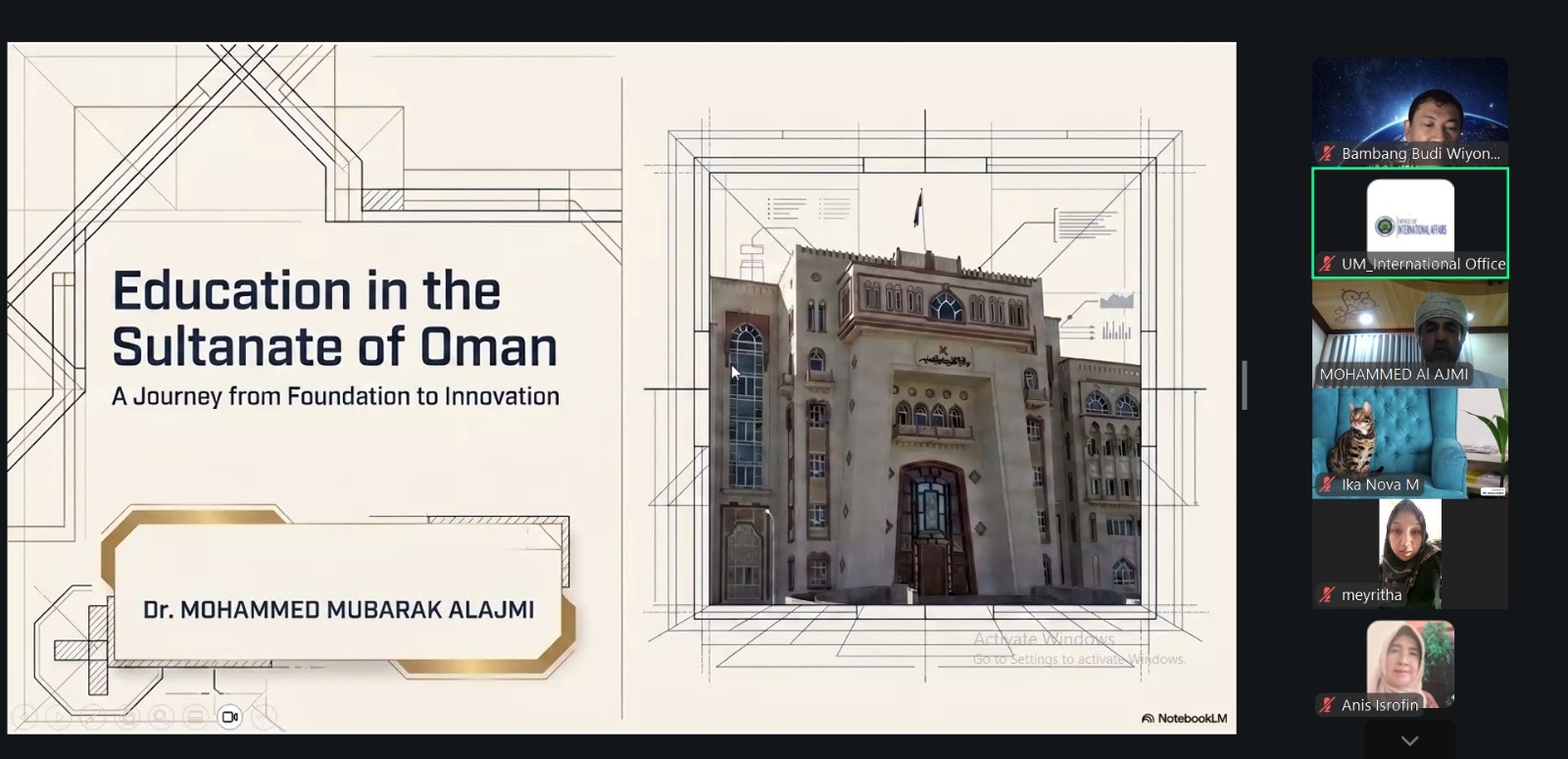
Beyond producing research outcomes, the collaboration also created opportunities to share international perspectives with the wider academic community. On 29 June 2026, Dr. Al Ajmi delivered an international online guest lecture entitled “Education System in the Sultanate of Oman”, offering participants first-hand insights into the country’s educational development and policy landscape.
During the session, Dr. Al Ajmi discussed the evolution of Oman’s education system, highlighting national education policies, curriculum development, professional guidance and counseling services, teacher capacity building, and the integration of technology to improve teaching and learning. Drawing from his experience at the Ministry of Education, he also shared how the Sultanate of Oman continues to strengthen educational quality while responding to emerging social and technological challenges.
The guest lecture attracted students, academics, and education practitioners interested in comparative education and international policy. The interactive discussion encouraged participants to exchange ideas, reflect on shared educational challenges, and explore potential areas for future collaboration between Indonesia and Oman.
Prof. Bambang Budi Wiyono emphasised that international collaboration should create lasting academic value beyond research outputs. “Schools and universities benefit greatly from meaningful communication and the exchange of ideas across borders. Through collaboration, we not only generate new knowledge but also learn from different educational contexts and experiences,” he said.
The combination of collaborative research and academic knowledge sharing reflects the broader objectives of the UM International Postdoctoral Fellowship. In addition to facilitating joint research, the programme encourages international fellows to actively engage with the university community through guest lectures, seminars, and other scholarly activities that enrich learning and strengthen global academic networks.
This initiative demonstrates Universitas Negeri Malang’s continued commitment to building sustainable international partnerships that generate tangible academic impact through both research and public engagement. By connecting researchers, policymakers, educators, and students across countries, the UM IPF programme contributes to a more collaborative and internationally connected higher education ecosystem.
The collaboration also supports the implementation of the Sustainable Development Goals (SDGs), particularly SDG 4 (Quality Education) and SDG 17 (Partnerships for the Goals), by promoting quality education through international knowledge exchange and strengthening global partnerships in higher education.
Source: Office of International Affairs, Universitas Negeri Malang.