
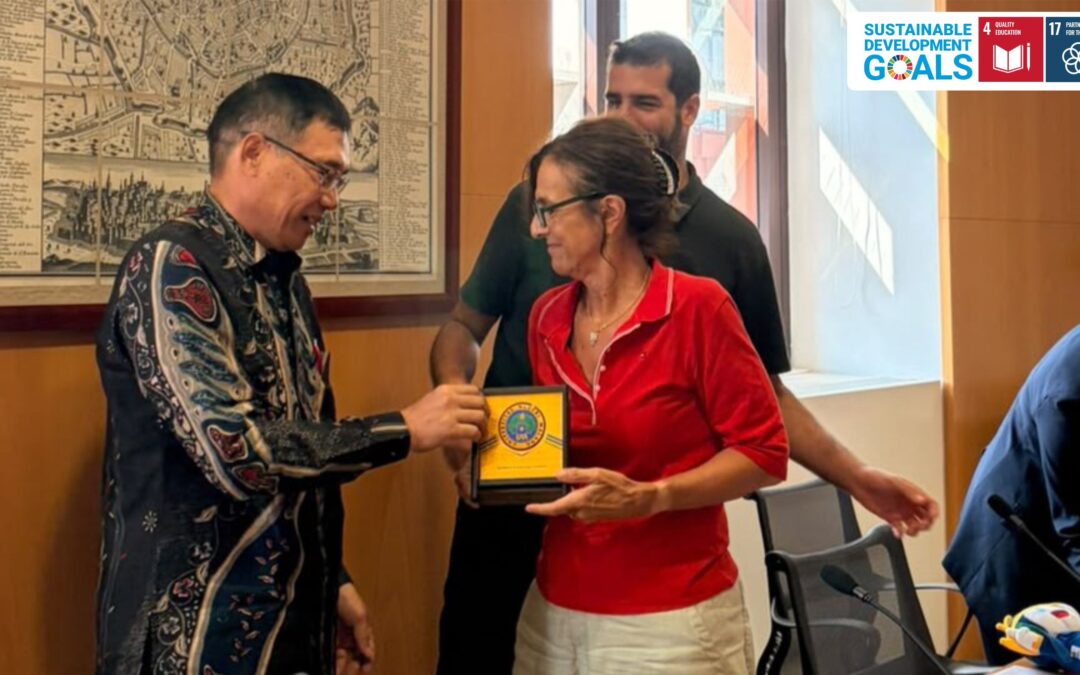
Milan, Italy — Universitas Negeri Malang (UM) continues to expand its international academic network by strengthening partnerships with global institutions. One such partner is Università degli Studi di Milano-Bicocca (UNIMIB), Italy, which has opened further opportunities for collaboration in education, research, and academic mobility.
The development was discussed during a meeting between a delegation of Indonesian teacher education institutions (LPTKs) and representatives of Università di Milano-Bicocca on Friday, September 18, 2026. The UM delegation was led by UM Rector Prof. Hariyono, M.Pd., accompanied by Vice Rector I Prof. Dr. H. Ibrahim Bafadal, M.Pd.; University Secretary Prof. I Wayan Dasna, M.Si., M.Ed., Ph.D.; Director of the Office of International Affairs (OIA), Sari Karmina, Ph.D.; and Head of the UM Library, Nurenzia Yannuar, Ph.D.
Representing Università di Milano-Bicocca were Prof. Stefano Malatesta, Prof. Silvia Vignato, who is a collaborator of Dr. Nurenzia Yannuar through the EuroSEAS Masterclass, Prof. Franco Passalacqua, and representatives of the International Relations Development Office.
The meeting focused particularly on opportunities for research collaboration and mobility programs for faculty members and students. The discussions subsequently moved toward several more concrete forms of cooperation, including opportunities for visiting professorships and student internship programs.
These initiatives are also aligned with the United Nations Sustainable Development Goals (SDGs), particularly SDG 4: Quality Education, through the development of international learning opportunities, academic exchange, and knowledge sharing. The partnership also contributes to SDG 17: Partnerships for the Goals by strengthening institutional collaboration and international academic networks.
Strengthening the International Academic Network
UM Rector Prof. Hariyono emphasized the importance of strengthening international networks and translating them into concrete and sustainable academic programs. Collaboration with Università di Milano-Bicocca represents an opportunity for UM to expand cooperation in education, research, and academic mobility.
In line with this, UM Vice Rector I Prof. Dr. H. Ibrahim Bafadal highlighted opportunities to develop cooperation in education and student and faculty mobility as part of efforts to strengthen the international experience of UM’s academic community.
Director of the UM Office of International Affairs, Sari Karmina, Ph.D., said that the meeting provided an important opportunity to identify concrete forms of cooperation that could be further developed between the two institutions.
“We would like the relationship between UM and Università di Milano-Bicocca to be translated into concrete programs, not only through information exchange, but also through student and faculty mobility, research collaboration, and various joint academic programs.”
The planned cooperation also reflects the role of higher education institutions in advancing SDG 17, particularly through international partnerships that facilitate the exchange of knowledge, expertise, and academic resources. At the same time, research collaboration and academic mobility can contribute to SDG 4 by creating broader opportunities for students and faculty to engage in international learning and research environments.
From the EuroSEAS Masterclass at the UM Library
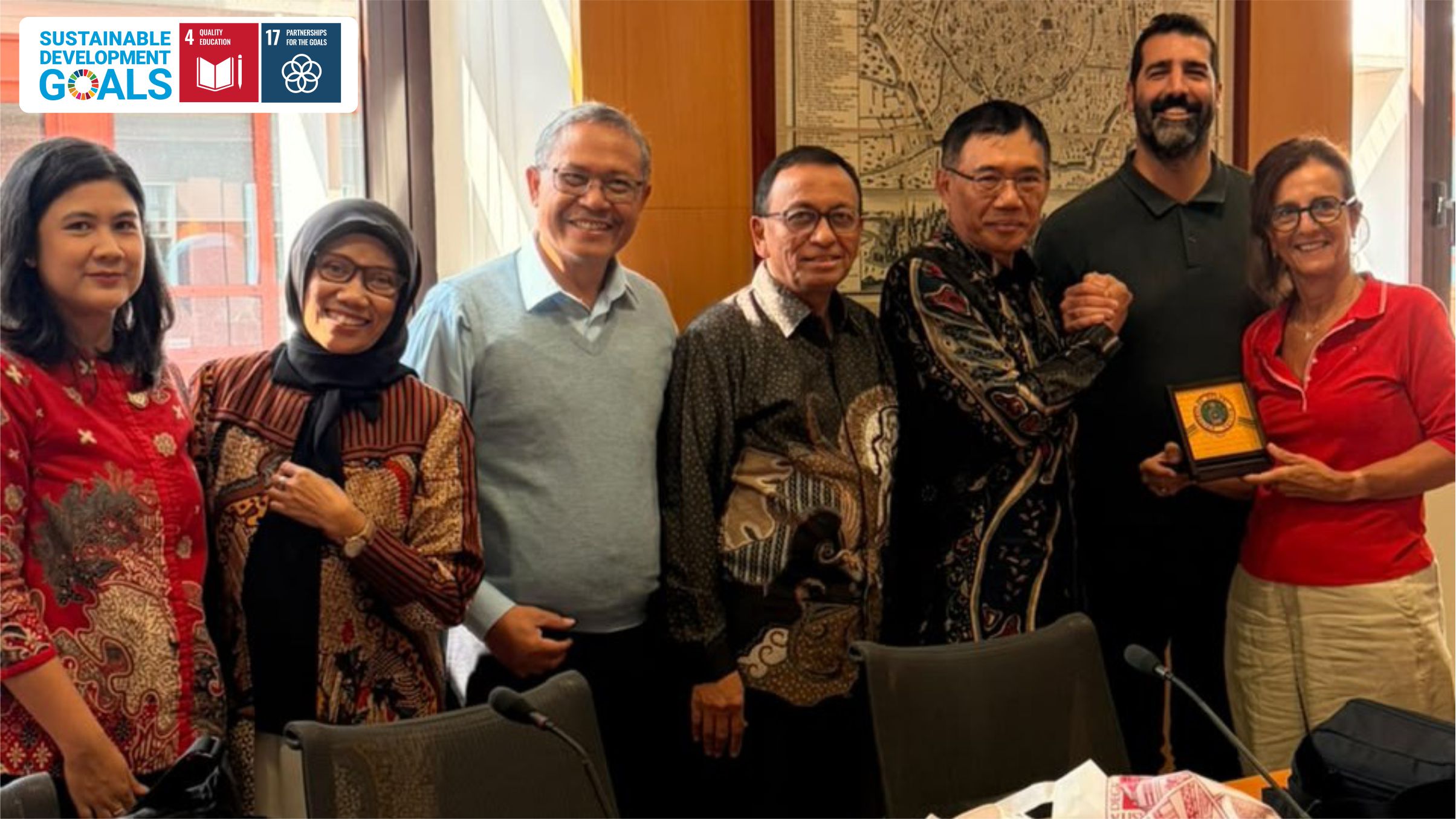
For Head of the UM Library, Nurenzia Yannuar, Ph.D., the meeting in Milan held particular significance. The academic relationship with Prof. Silvia Vignato of Università di Milano-Bicocca was initially established through the EuroSEAS Masterclass held at the UM Library.
The program brought together doctoral students and senior international scholars in the field of Southeast Asian studies. Prof. Silvia Vignato was one of the senior scholars involved in the program.
The experience subsequently became part of a growing academic network between UM and scholars from Milano-Bicocca. Such academic forums support SDG 4: Quality Education by facilitating knowledge exchange, strengthening research capacity, and connecting students with international scholars.
“For me, it is interesting to see how an academic activity that was once held at the UM Library can develop into a broader network. Through the EuroSEAS Masterclass, we established academic connections with the scholars involved, including Prof. Silvia Vignato. Now, these relationships are beginning to develop into more concrete forms of collaboration,” said Nurenzia.
One of the potential areas of cooperation currently being explored is a visiting professorship for Prof. Silvia Vignato at UM. Her potential appointment as a visiting professor could be further developed through guest lectures, academic seminars, research discussions, and other academic activities.
These activities would provide opportunities for students and faculty members to interact directly with international scholars, exchange perspectives, and develop cross-cultural academic competencies, further supporting SDG 4 and SDG 17.
Exploring Internship Opportunities for Italian Students at UM Lab School
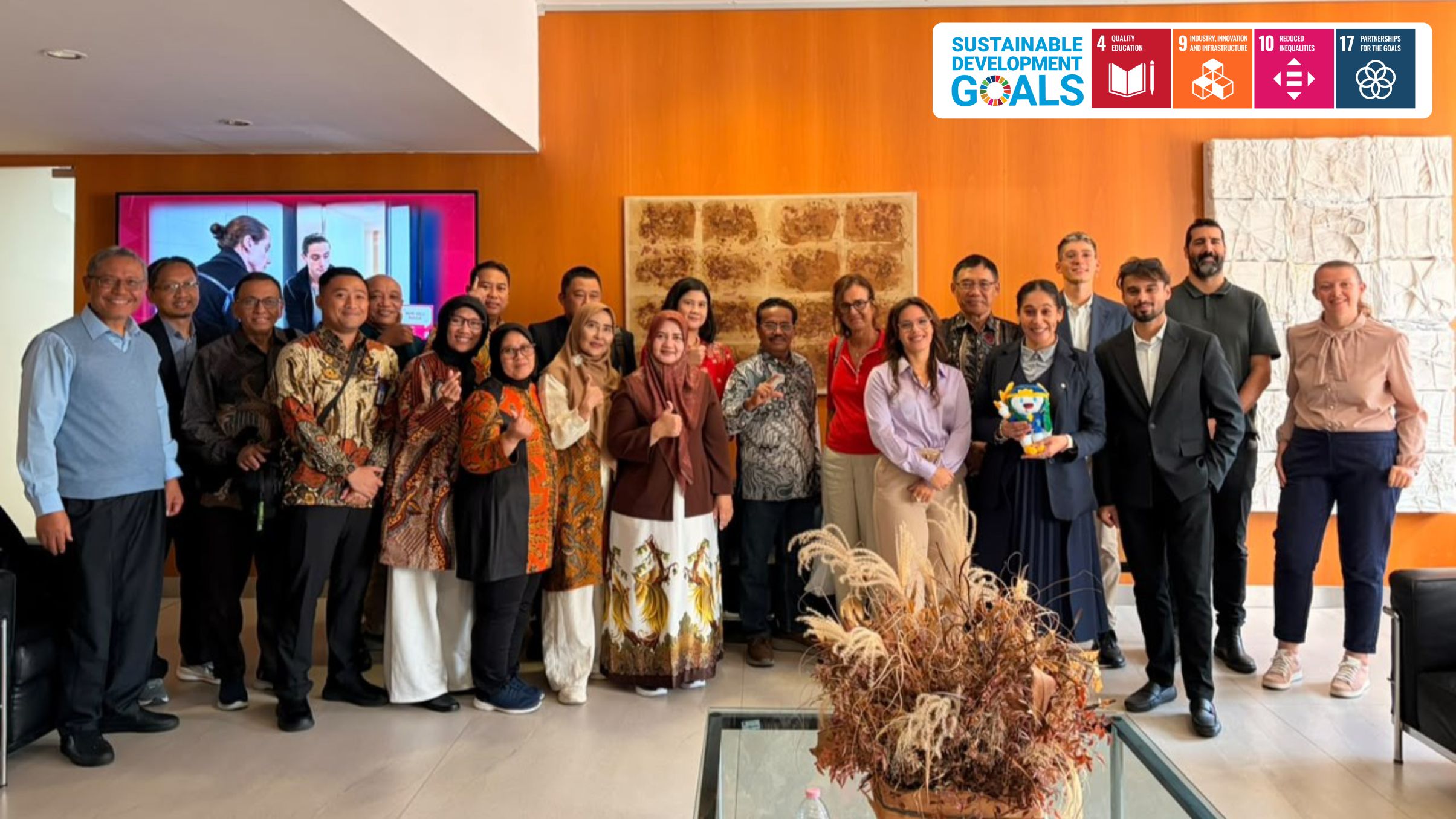
In addition to the visiting professor program, the meeting also explored other potential areas of cooperation, including internship opportunities for education students from Università di Milano-Bicocca at UM, particularly through the UM Lab School.
Such a program could provide students pursuing education programs in Italy with opportunities to gain firsthand experience of the Indonesian education system, teaching and learning practices, as well as Indonesia’s social and cultural context.
The proposed internship program is closely connected to SDG 4: Quality Education, particularly through experiential learning and the development of future educators with broader international perspectives. Cross-border academic experiences can also contribute to SDG 10: Reduced Inequalities by creating opportunities for students from different educational and cultural backgrounds to learn from one another and engage in more inclusive academic environments.
At the same time, the exchange of educational practices and research-based approaches can contribute to SDG 9: Industry, Innovation and Infrastructure, particularly by supporting innovation and knowledge development within education and research ecosystems.
The meeting between UM and Università di Milano-Bicocca marked an initial step toward developing a range of collaborative opportunities, including research collaboration, faculty and student exchange, visiting professorships, and student internships.
Through these initiatives, academic relationships that have previously grown through scholarly networks can be further developed into broader, more structured, and sustainable institutional cooperation. More importantly, the partnership demonstrates how international higher education collaboration can contribute to the achievement of the Sustainable Development Goals, particularly SDG 4 (Quality Education) and SDG 17 (Partnerships for the Goals), while supporting broader efforts toward inclusive education, research development, and international knowledge exchange.