
MALANG — The Department of Physics at Universitas Negeri Malang (UM) continues to strengthen its international academic environment through a co-teaching session with an international scholar from Universiti Teknologi Malaysia. Held on Tuesday (5 May 2026) at Room 317, Building A19, the session featured Dr. Mohd Shahril Salleh as the main speaker, delivering lectures on Renewable Energy and Waste Treatment Technology.
The initiative forms part of the department’s ongoing efforts to enhance the quality of teaching and broaden students’ global perspectives, particularly in the fields of sustainable energy and environmental technology.
In the first session, Dr. Mohd Shahril Salleh explored the potential of renewable energy sources as a solution to the global electricity crisis. His lecture covered advancements in environmentally friendly energy technologies, the utilisation of sustainable resources, and the challenges of implementing renewable energy systems, particularly in the Indonesian context.
The second session focused on waste treatment technology, addressing both solid and liquid waste management. The discussion highlighted key principles of pollution reduction and examined how waste can be transformed into alternative energy sources through sustainable technological approaches.
The co-teaching sessions were delivered in an interactive format, encouraging active discussion between students and the speaker. Participants were given the opportunity to explore current challenges in energy and waste management, as well as innovative solutions grounded in science and technology.
This initiative aligns with the Sustainable Development Goals (SDGs), particularly Goal 7 (Affordable and Clean Energy) and Goal 13 (Climate Action). Through internationally enriched learning experiences, students are expected to gain a deeper understanding of how physics contributes to addressing global environmental and energy challenges.
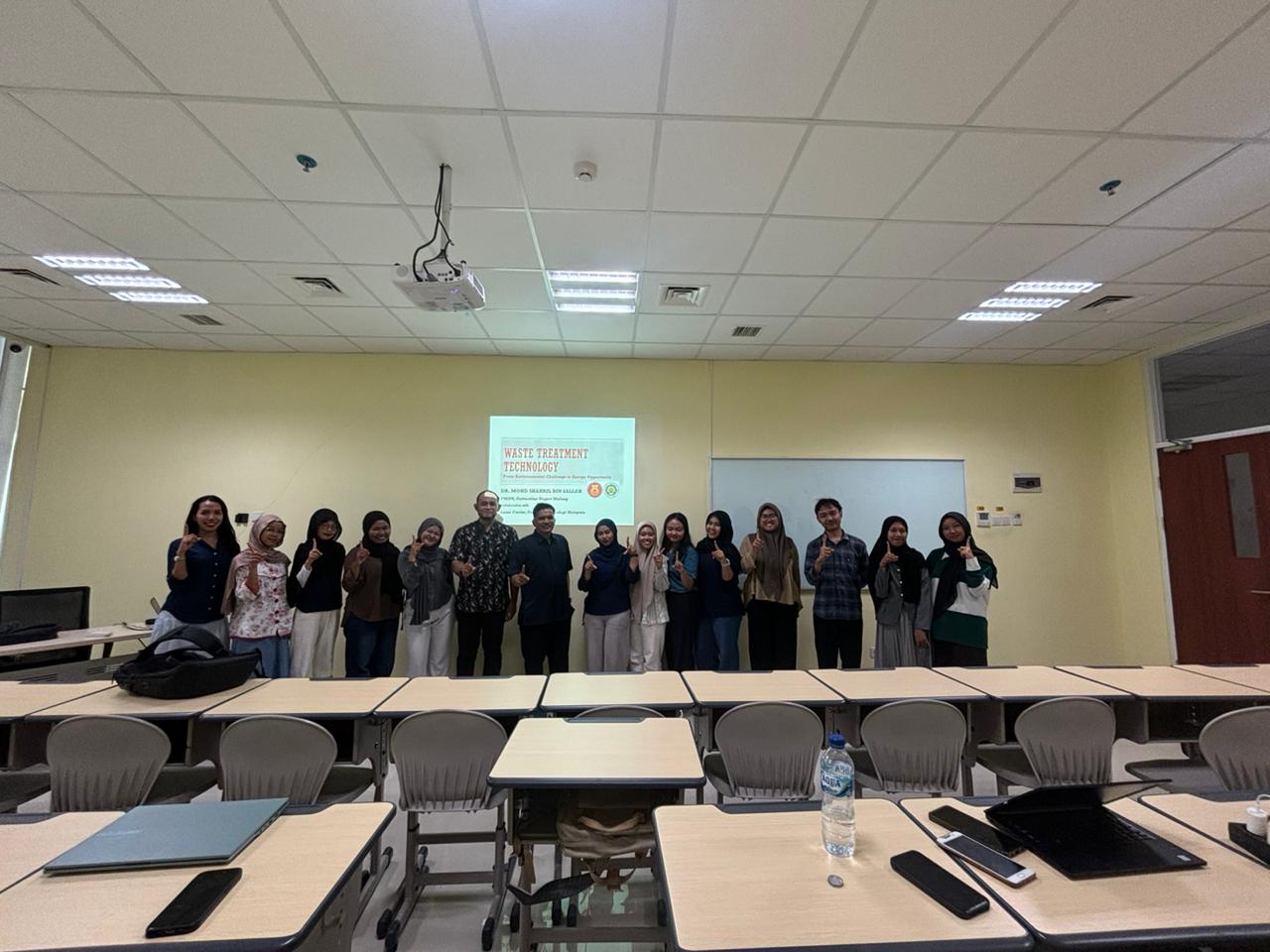
Dr. Mohd Shahril Salleh emphasised that the development of renewable energy and waste treatment technologies plays a critical role in supporting global environmental sustainability. He also noted that cross-border academic collaboration creates valuable opportunities for knowledge exchange and helps broaden students’ perspectives on global issues.
Universitas Negeri Malang expressed its appreciation for the successful implementation of this activity. The co-teaching initiative is expected to strengthen students’ competencies in understanding emerging technologies in energy and environmental fields, while also reinforcing international academic networks.
Through initiatives like this, Universitas Negeri Malang reaffirms its commitment to fostering a collaborative, innovative, and globally competitive learning environment.
Source: https://www.jatimsatunews.com/2026/05/dorong-pembelajaran-berstandar-global.html
Content adapted and translated by the Office of International Affairs, Universitas Negeri Malang
 English (UK)
  Bahasa Indonesia