

Universitas Negeri Malang (UM) continues to strengthen its contribution to environmental research through the development of a wastewater treatment technology for the fish processing industry using the Upflow Anaerobic Sludge Blanket (UASB) reactor system. The initiative forms part of an internationally oriented research effort titled “Sustainable Treatment of Fish Processing Wastewater by Anaerobic Granular Sludge in Upflow Anaerobic Sludge Blanket (UASB) Reactors.”
The research is supported under a postdoctoral scheme aimed at fostering cross-border collaboration and enhancing global research capacity. The project is led by Eli Hendrik Sanjaya, Ph.D., from the Department of Chemistry, who also serves as Head of the Center for Science and Engineering (PSR), Institute for Research and Community Service (LPPM) at UM.
The study focuses on developing an efficient treatment system for fish processing wastewater using anaerobic granular sludge within a UASB reactor. This technology is known for its effectiveness in reducing organic pollutants while simultaneously generating biogas, offering added value as a renewable energy source.
The research involves international collaboration with Hong Chen from Changsha University of Science and Technology (CSUST), China, as well as Malaysian postdoctoral researcher Dr. Nur Fatihah. This partnership reflects UM’s commitment to expanding global research networks and accelerating technology transfer in the field of biotechnology-based wastewater treatment.
According to Eli Hendrik Sanjaya, wastewater from the fish processing industry presents a significant environmental challenge due to its high content of organic matter, fats, and proteins, which can severely impact water quality. By applying anaerobic granular sludge in a UASB reactor system, the research not only achieves efficient pollutant reduction but also converts waste into usable energy in the form of biogas.
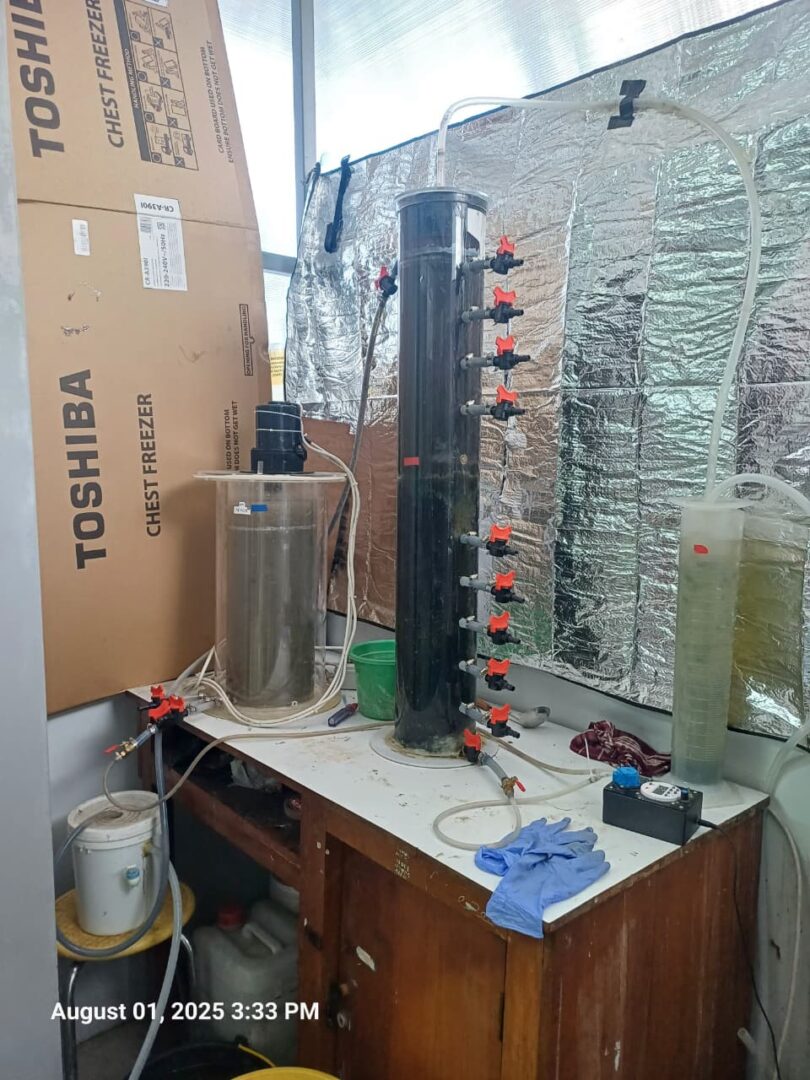
The outcomes of this study are expected to contribute to several Sustainable Development Goals (SDGs), including SDG 6 (Clean Water and Sanitation) through improved wastewater treatment, SDG 7 (Affordable and Clean Energy) through biogas utilisation, SDG 9 (Industry, Innovation and Infrastructure), SDG 12 (Responsible Consumption and Production), and SDG 13 (Climate Action).
In addition to producing publications in reputable international journals, the research is expected to serve as a foundation for the development of wastewater treatment technologies for the fish processing industry in Indonesia, particularly for small and medium-scale enterprises.
With its efficient and environmentally friendly approach, UASB technology holds strong potential as a practical solution to support more sustainable practices in the fish processing industry. This initiative further underscores Universitas Negeri Malang’s commitment to advancing collaborative, high-impact research and contributing to the resolution of environmental challenges through science and innovation.
Translated by the Office of International Affairs, Universitas Negeri Malang
 English (UK)
  Bahasa Indonesia